Skip to content
Small Living Room Layout Ideas for Rentals: Smart Ways to Make a Tiny Apartment Work Better
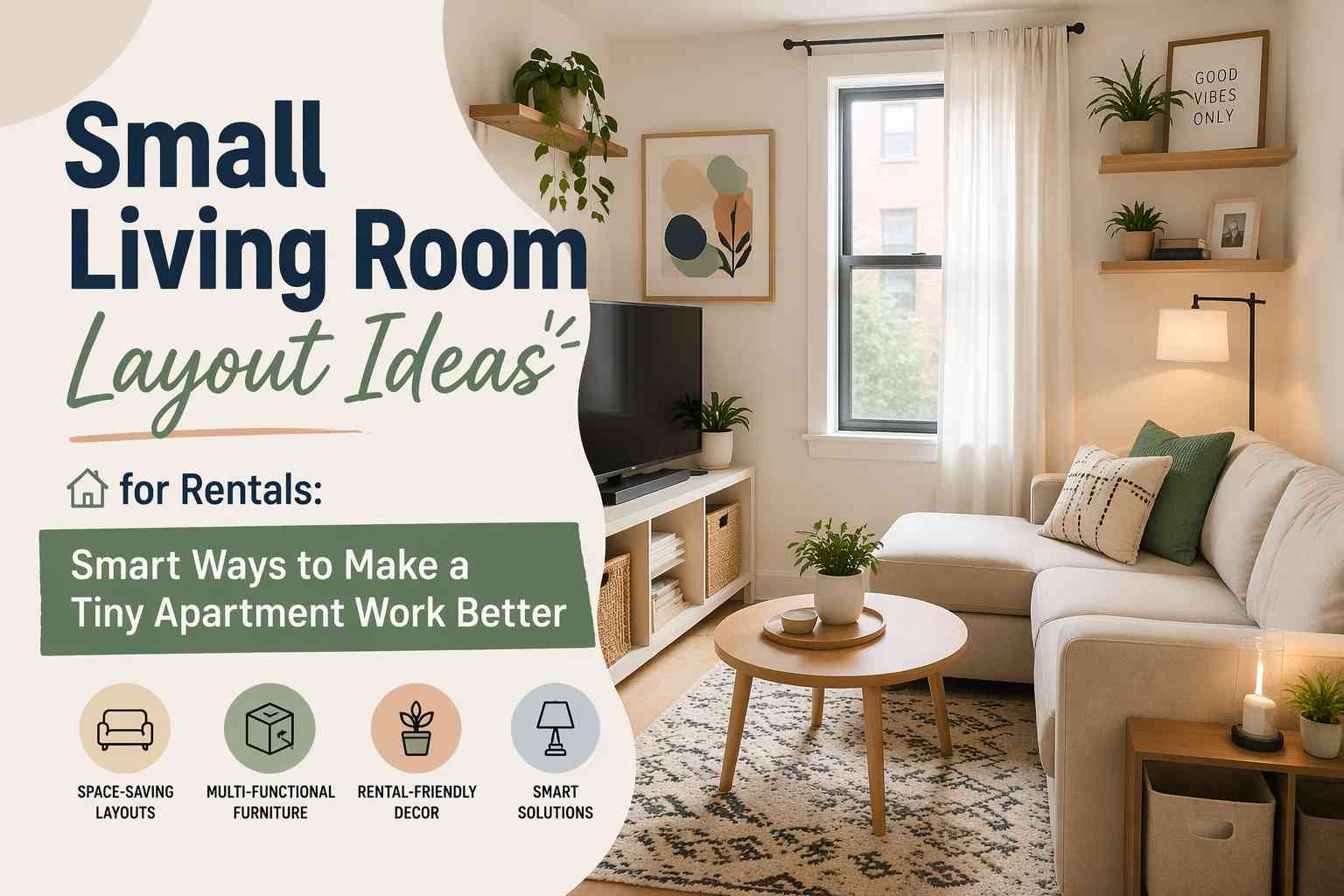
A small rental living room can be one of the hardest spaces to arrange. It is often the first room people see, the place where you relax after work, and sometimes the only area available for dining, working, exercising, or hosting friends. The challenge is not just that the room is small. The bigger challenge is that you are renting, which means every design decision comes with limits.
You may not be allowed to paint the walls. You may not want to drill holes and risk your security deposit. The lighting may be basic. The flooring may not match your style. The windows may come with old blinds. The front door may open directly into the living room. A radiator, air conditioner, awkward column, or badly placed outlet may decide where your sofa can go before you even start planning.
That is why a thoughtful small living room layout matters so much in a rental apartment. You cannot always renovate the space, but you can change how the space works. The right furniture placement can open up a walkway, create a more comfortable seating area, hide visual clutter, make better use of natural light, and help one small room support several daily activities.
This is also where rental apartment AI can be useful. Instead of guessing whether the sofa should face the window, the TV, or the kitchen, you can use tools like EzRemove AI Room Design to explore visual style ideas and see how different furniture arrangements might change the feeling of the room. For more layout-focused planning, the EzRemove AI Room Planner can help you test whether a round coffee table works better than a rectangular one, whether a desk fits behind the sofa, whether a storage wall looks too heavy, or whether removing one chair makes the room feel more open.
The goal is not to make your rental look like a showroom. The goal is to make it feel easier to live in. These small living room layout ideas are designed for real renters dealing with small spaces, strict leases, awkward furniture, tight budgets, and the need for flexible, non-permanent solutions.
Why Small Rental Living Rooms Are So Difficult to Plan
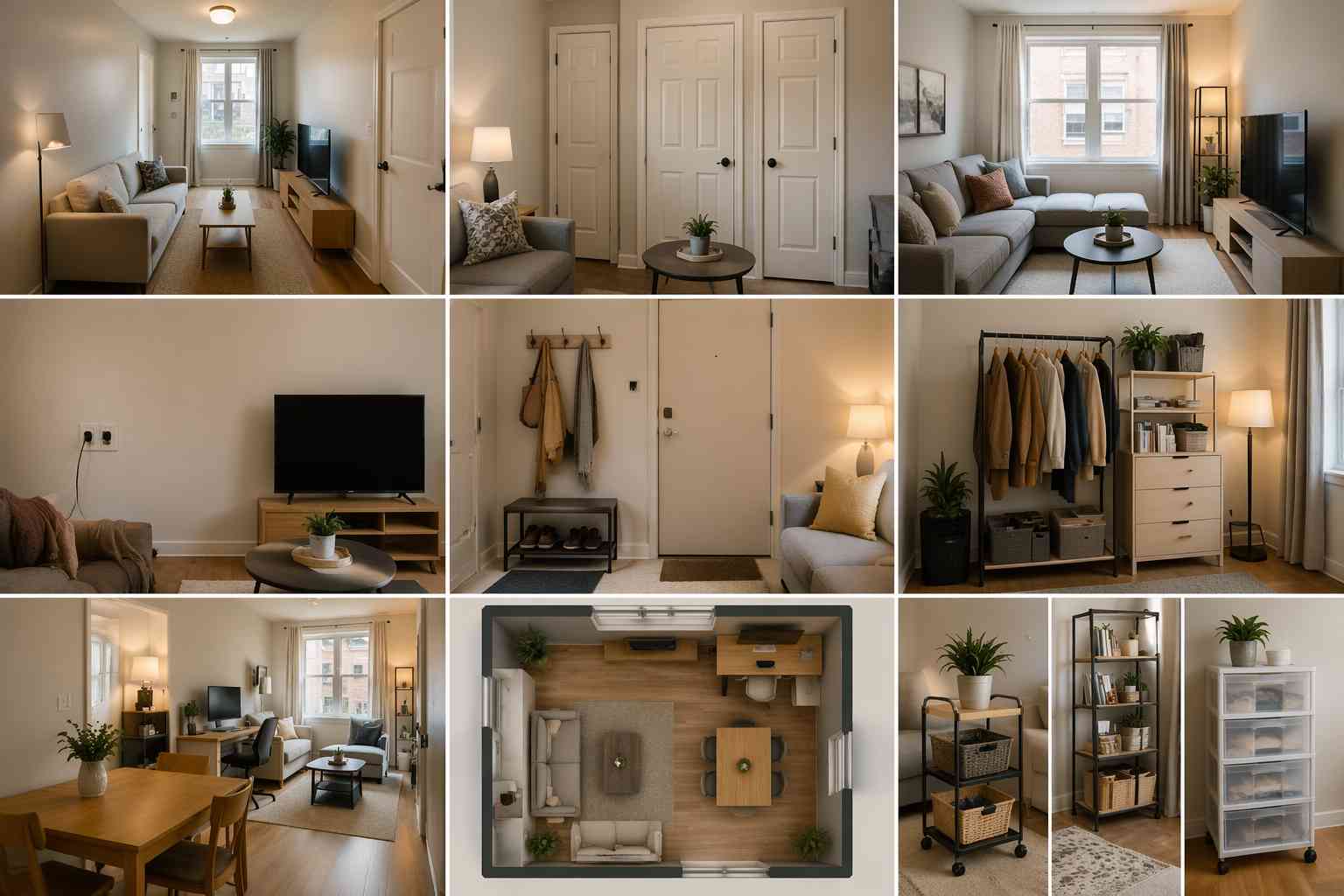 A small rental living room has to solve more problems than a regular living room. In a home you own, you might install built-in shelves, repaint the walls, replace lighting, mount cabinets, or customize storage. In a rental, you usually need solutions that can be removed, moved, or reversed.
The most common rental pain points are simple but frustrating. The room may be too narrow. There may be too many doors. The window may be in the only good sofa spot. The TV outlet may be on the wrong wall. There may be no entryway. There may be no closet. The room may need to work as a living room, dining room, and office at the same time.
A good layout starts by solving these real problems first.
| Rental Living Room Problem | Why It Happens | Layout Solution |
|---|---|---|
| The room feels crowded | Furniture is too large or badly placed | Use slimmer furniture and keep the main walkway open |
| There is no clear entryway | The front door opens into the living room | Add a narrow bench, rug, basket, or console near the door |
| The sofa blocks movement | The sofa is too deep or placed across the traffic path | Move it to the longest wall or choose an apartment-size sofa |
| The room feels dark | There is only one overhead light | Add floor lamps, table lamps, or plug-in wall lights |
| There is not enough storage | The rental lacks built-ins | Use hidden storage furniture and vertical shelving |
| The space feels random | There is no focal point | Create one with a window, TV wall, rug, art, or shelving |
| The room has too many functions | One space must support daily life | Divide the room into small zones with rugs, lighting, and furniture |
The key is to stop thinking only about decoration. In a small rental, layout is the foundation. Decor comes after the room works.
Start with the Real Function of the Room
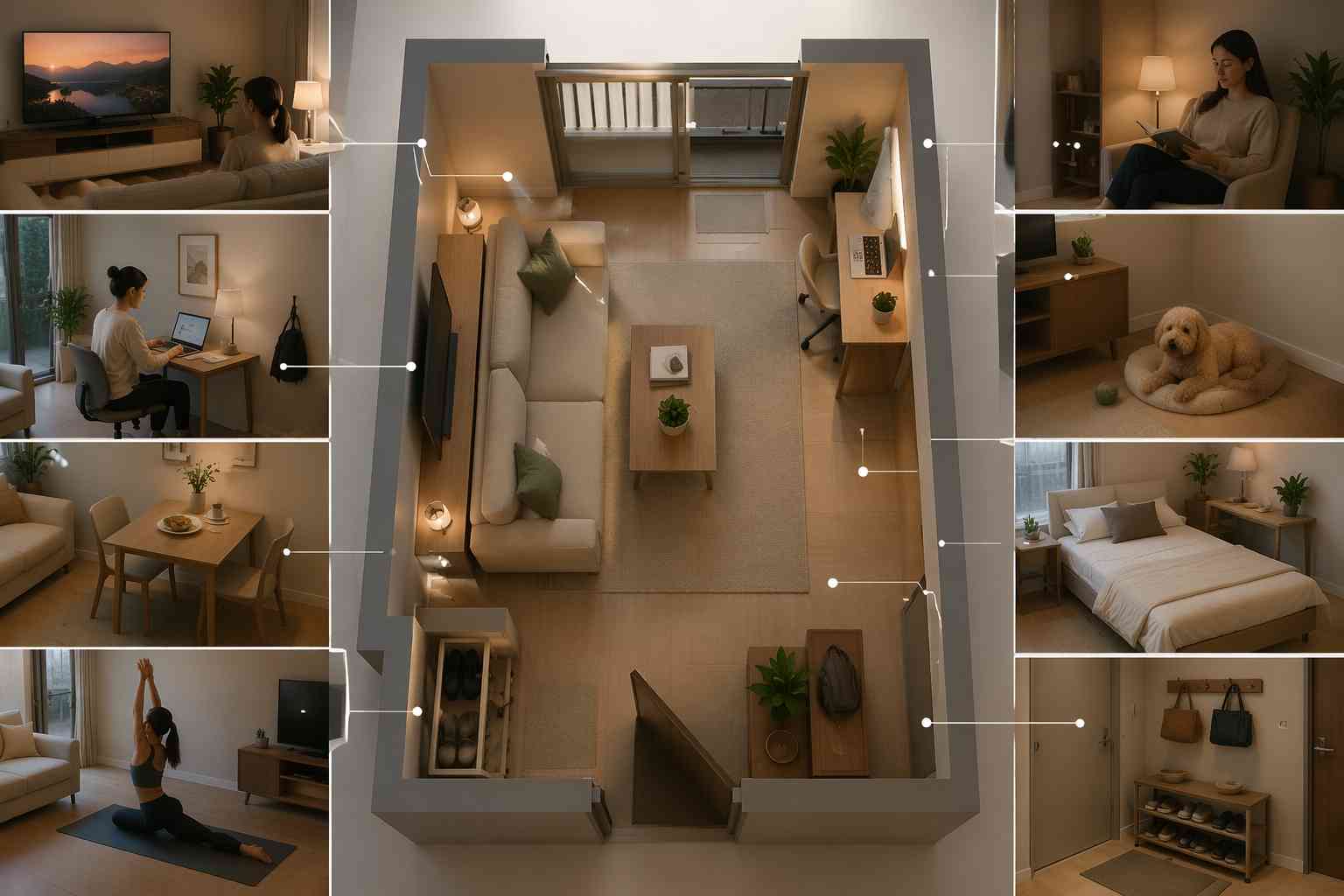 Before you think about furniture style, start with function. Most small rental living rooms are not just living rooms. They are multi-use spaces. A room that is only 100 or 150 square feet may need to act as a lounge, entryway, TV room, home office, dining nook, reading corner, pet area, and guest space.
If you plan the room as if it only has one job, the layout will probably fail. A large sofa and coffee table may look normal in a traditional living room, but they may not work if you also need a laptop desk, shoe storage, and space to open a sofa bed. A beautiful accent chair may not be worth keeping if no one sits in it and it blocks the route to the balcony.
Ask yourself what the room must do every day. Do you watch TV often? Do you work from home? Do you eat in this room because there is no dining area? Do you need floor space for workouts, pets, or kids? Do guests sleep here? Do you need a place to drop keys, bags, and shoes when you come home?
Once you know the top two or three functions, the layout becomes easier. If TV watching is the priority, the sofa and screen relationship should guide the room. If working from home matters more, a compact desk may be more important than a coffee table. If storage is the main issue, a slim storage wall may be more useful than an extra chair.
A good small living room layout is not about fitting in more furniture. It is about choosing the right furniture for the way you actually live.
Use Rental Apartment AI Before You Move Anything
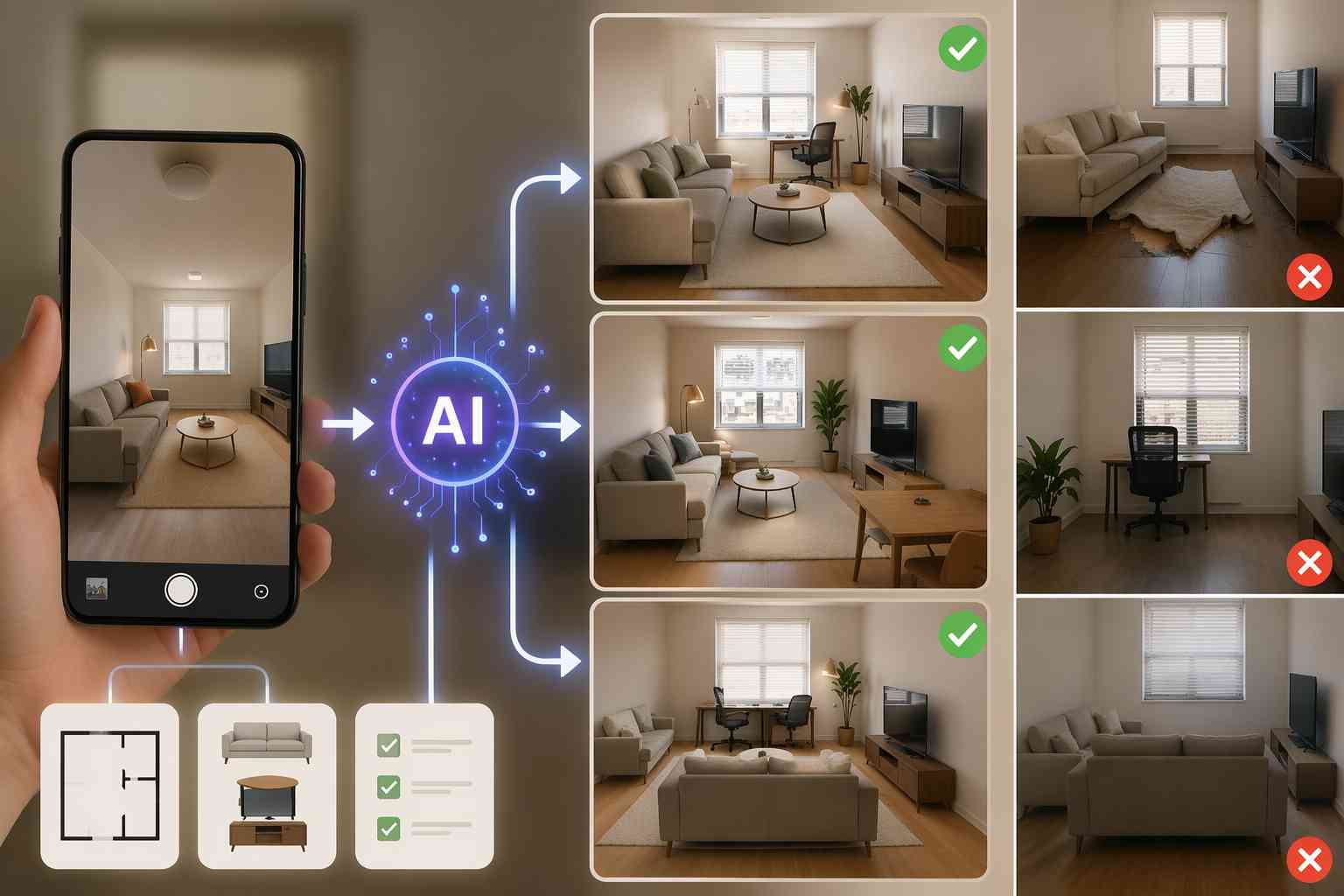
One of the biggest frustrations in a small rental is that every furniture change feels like a project. Moving the sofa may require moving the rug. Moving the rug may reveal ugly flooring. Changing the TV wall may create a cable problem. Adding a desk may block a window. Small rooms are connected systems, so one decision affects everything else.
Rental apartment AI can help you test layout ideas before you commit. You can upload a room photo, describe your space, or enter basic details like room shape, furniture pieces, and must-have functions. AI can then help you explore different arrangements visually.
| How to Use Rental Apartment AI | What It Helps You Decide |
|---|---|
| Upload a room photo | See possible layouts based on your real space |
| Describe your furniture | Test whether your existing pieces can work better |
| Ask for renter-friendly ideas | Avoid painting, drilling, or permanent installation |
| Compare several layouts | Find the best sofa, TV, desk, or dining position |
| Test furniture scale | Avoid buying items that are too large |
| Preview color palettes | Create a more cohesive look before buying decor |
| Ask for storage ideas | Solve clutter without adding bulky cabinets |
AI is especially helpful when you feel stuck. Many renters repeat the same layout because it seems like the only option. AI can suggest a floating sofa, a no coffee table layout, a storage wall, a mini entry zone, or a better desk location.
Still, AI should not replace measuring. Always measure your room, sofa, table, rug, door swings, outlets, heaters, and walkways. Use rental apartment AI for ideas, then use real dimensions to confirm what will work.
Measure the Room and Your Habits
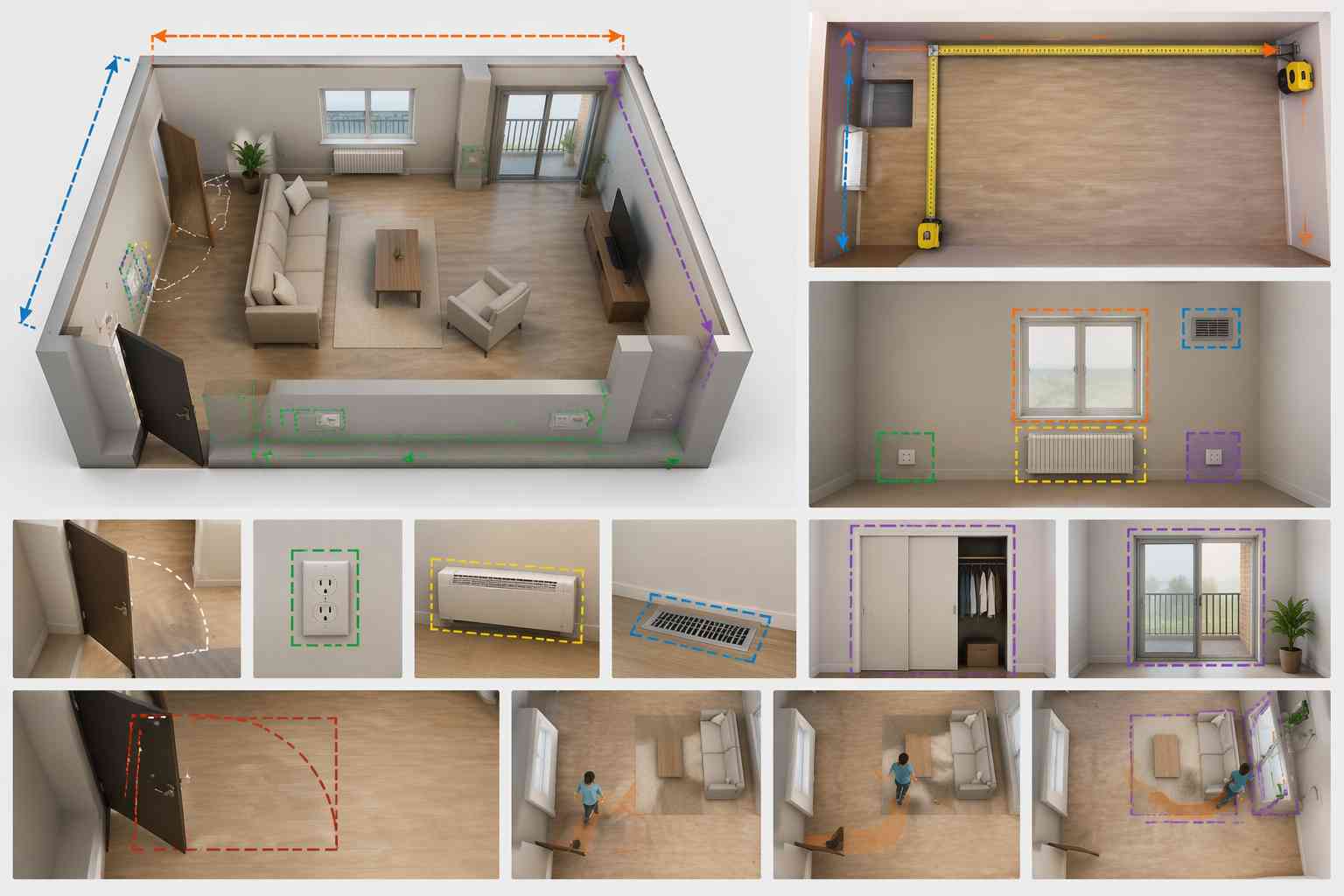 Most renters measure furniture only when buying something new. For a small living room layout, you need to measure more than furniture. You need to measure how the room is used.
Start with the basics. Measure the length and width of the room. Measure each wall separately, especially if the room is not a perfect rectangle. Mark windows, doors, outlets, heaters, vents, built-in closets, columns, and balcony doors. Note where doors swing open. If the front door opens into the living room, mark the area needed for entry movement.
Then measure your existing furniture. Include the width, depth, and height of the sofa, chairs, coffee table, TV stand, shelves, desk, and storage pieces. Sofa depth is especially important. In small rooms, a deep sofa can take away more walking space than you expect.
Now measure your habits. Where do you naturally walk? Where do bags land? Where do shoes pile up? Where do cords collect? Where do you eat? Where does clutter appear by the end of the day?
Those daily patterns tell you what the room needs. If the entry always becomes messy, carve out a mini entry zone. If the coffee table is always covered in work items, you may need a small desk or storage basket nearby. If the walkway always feels blocked, you may need to remove or replace a central table.
A small rental living room works best when the layout supports your habits instead of fighting them.
Choose One Clear Focal Point
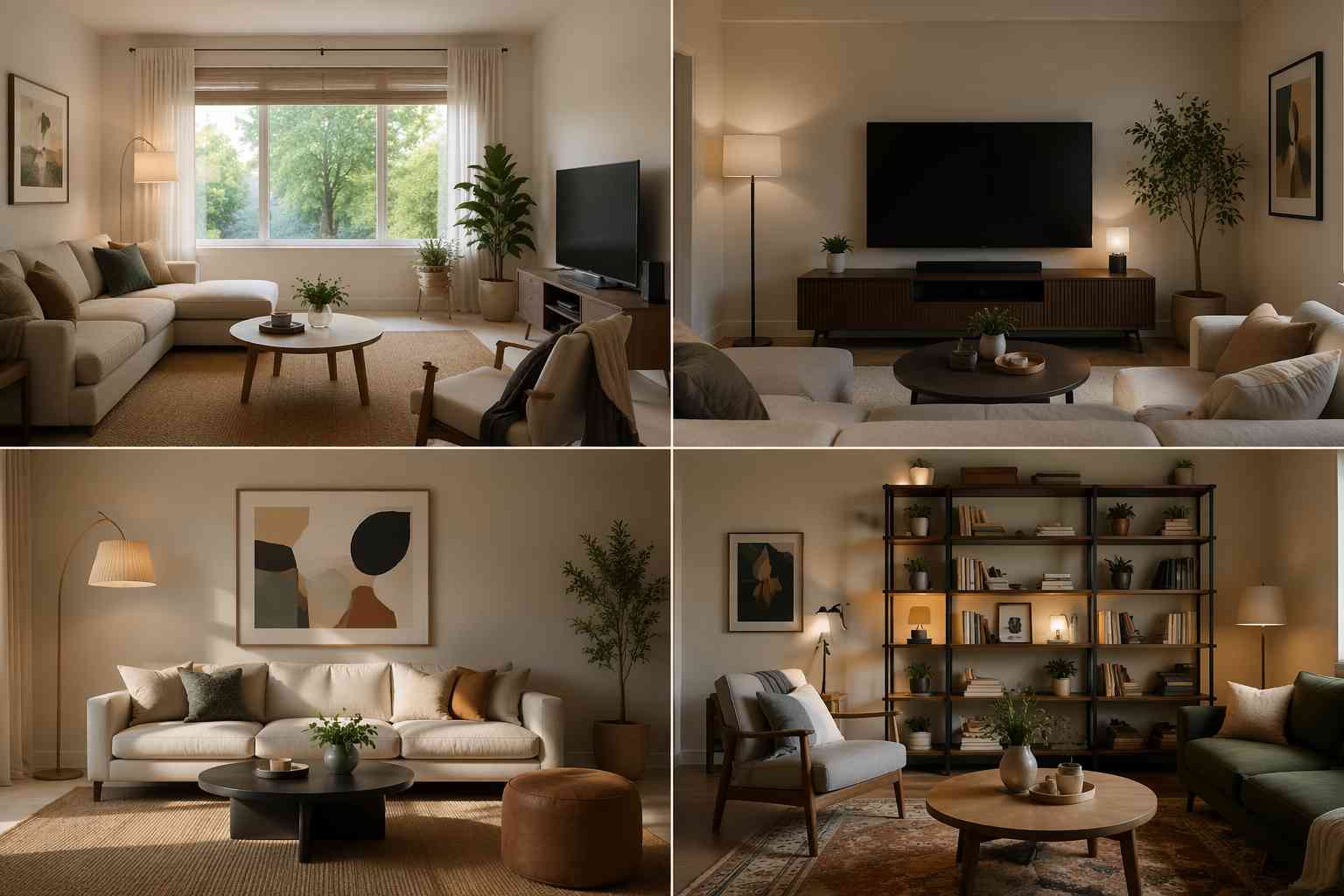 A small room feels more organized when it has a clear focal point. Without one, furniture can look scattered and the eye has nowhere to rest. In a rental living room, the focal point might be the TV, a window, a sofa wall, a piece of large art, a bookshelf, or a cozy conversation area.
If the room has a strong window, use it. Natural light can make the space feel bigger, and a good window view can become free decor. Arrange seating so the window feels connected to the living area instead of hidden behind furniture.
If the TV is the main focal point, make the setup clean and proportional. Use a slim media console, hide cords, and avoid surrounding the screen with too many small objects. If the TV wall looks heavy, balance it with a plant, a lamp, or artwork on the opposite side.
If your rental has no natural focal point, create one. A large framed print over the sofa, a statement floor lamp, a carefully styled shelf, or a rug that anchors the seating area can make the room feel intentional.
The key is to avoid too many competing focal points. A small room can quickly feel chaotic if the TV, desk, bookshelf, entryway, and dining table all fight for attention. Let one area lead, then make the other zones quieter.
Keep the Main Walkway Open
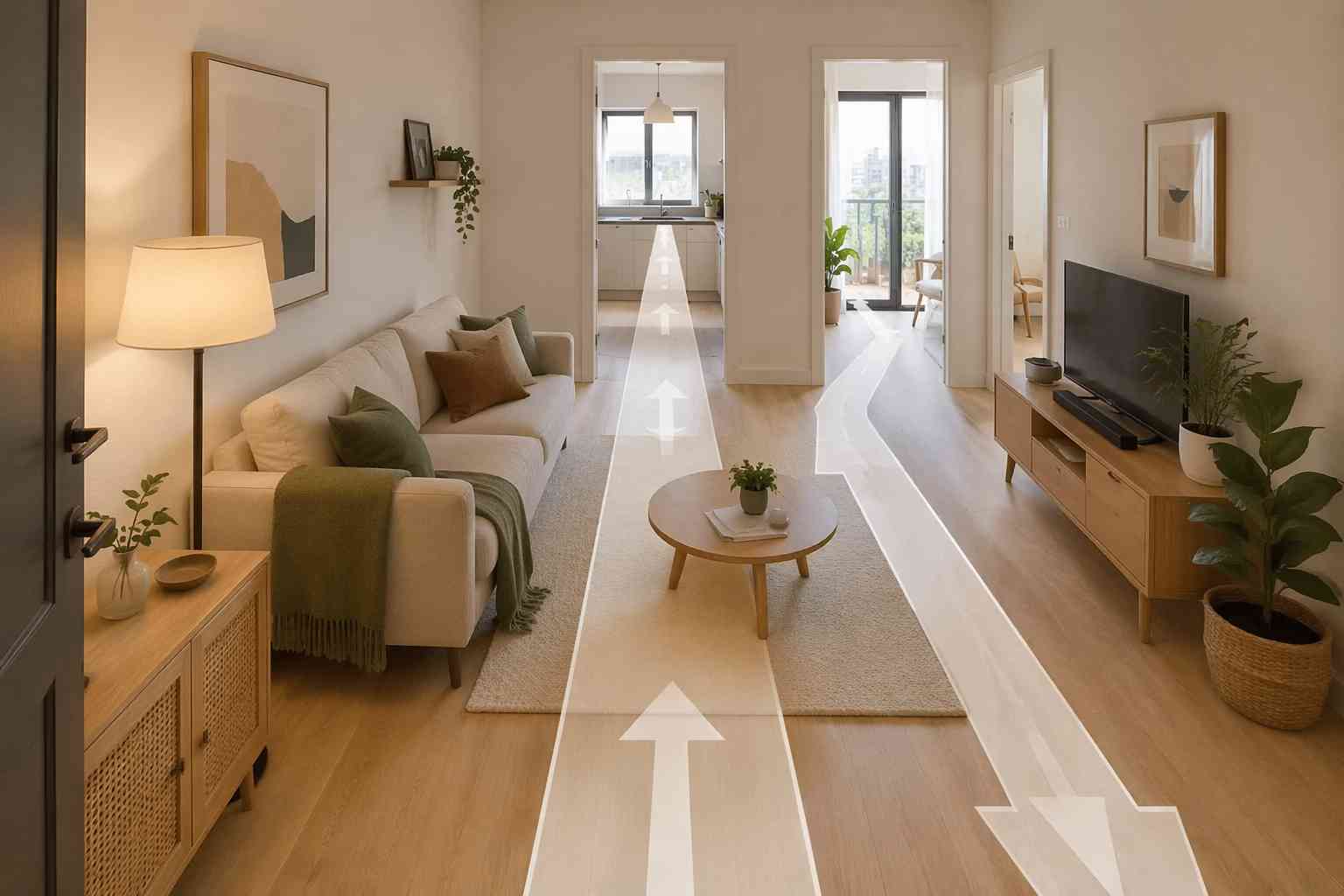 A small living room can look stylish in photos and still feel terrible in daily life if the walkway is blocked. Flow is one of the most important parts of layout planning.
Identify the main path through the room. It may run from the front door to the kitchen, from the bedroom to the sofa, from the sofa to the balcony, or from the entry to the hallway. This path should feel natural, not like an obstacle course.
Avoid placing sharp furniture corners in tight walkways. Round coffee tables, nesting tables, small ottomans, and curved side tables often work better than heavy rectangular pieces. If people need to turn sideways to walk through the room, something is too large or placed in the wrong spot.
Many rental living rooms also function as pass-through spaces. That means you cannot design them like closed formal sitting rooms. You need breathing room around furniture, even if that means choosing a smaller sofa or skipping an accent chair.
When testing layouts with rental apartment AI, look beyond style. Ask whether the layout leaves a clear route between key areas. A beautiful design is not useful if it blocks daily movement.
Small Living Room Layout Ideas for Rentals
The best layout depends on your room shape, furniture, lifestyle, and lease restrictions. Use the table below to quickly compare common layout options.
| Layout Idea | Best For | Main Benefit | What to Watch Out For |
|---|---|---|---|
| Wall sofa layout | Narrow rectangular rooms | Simple, familiar, easy to arrange | Can feel flat if everything is pushed to walls |
| Floating sofa layout | Studios and open-plan rentals | Creates zones without walls | Needs enough space behind the sofa |
| No coffee table layout | Very small rooms | Opens the center of the room | Needs side tables or C-tables for function |
| Corner sofa layout | Cozy TV areas | Maximizes seating in one zone | A large sectional can overwhelm the room |
| Work-from-home layout | Remote workers | Adds a desk without a separate office | Work clutter needs hidden storage |
| Dining combo layout | Apartments without dining rooms | Combines eating and relaxing | Chairs must not block the walkway |
| Storage wall layout | Rentals with limited closets | Reduces clutter | Large storage can feel heavy if poorly scaled |
| Window-focused layout | Bright rooms with views | Makes the room feel larger and lighter | Avoid blocking natural light |
Layout Idea 1: The Simple Wall Sofa Layout
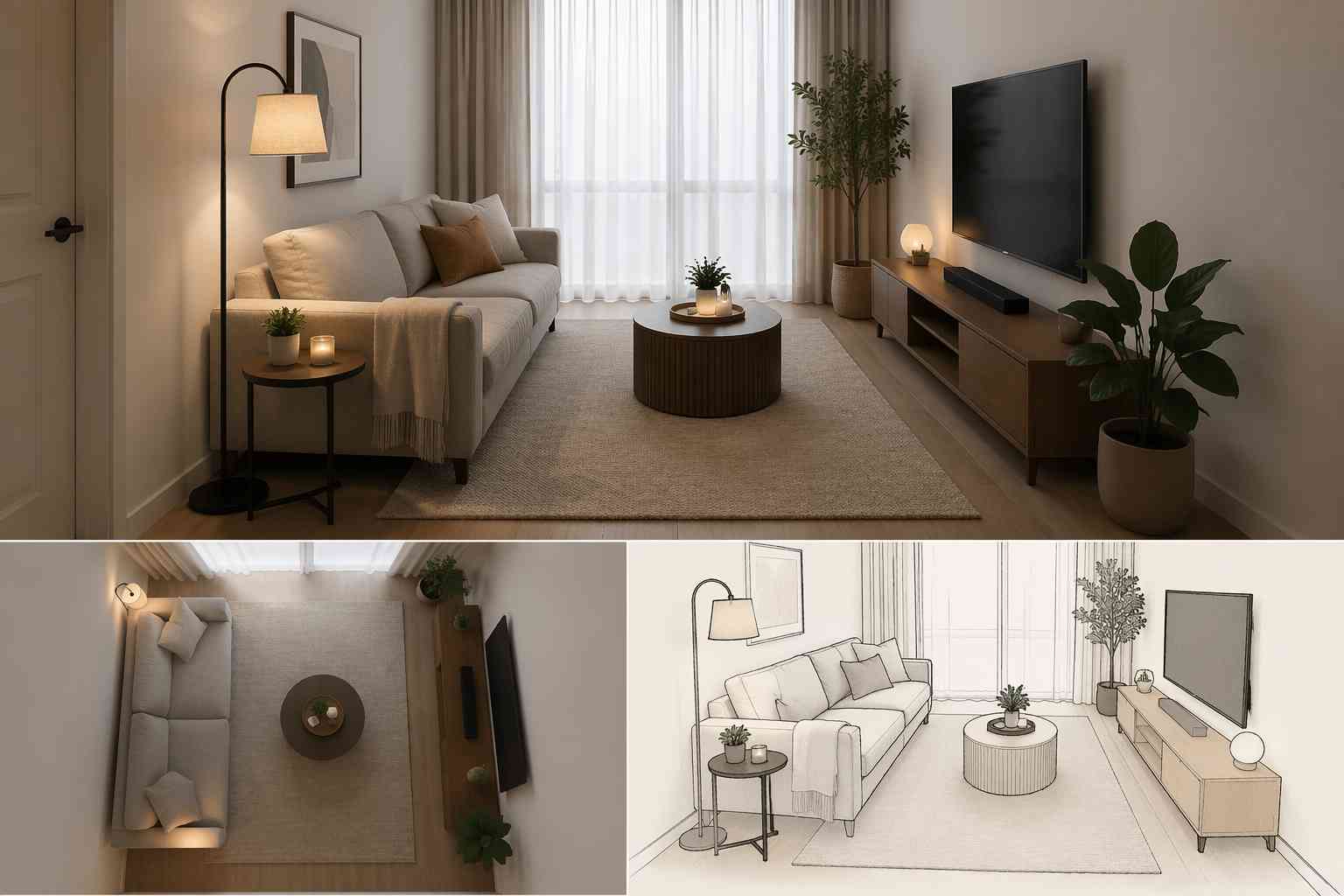 The classic wall sofa layout is often the easiest starting point for a small rental. Place the sofa along the longest uninterrupted wall, then position the TV, media console, or focal point opposite it. This works especially well in narrow rectangular rooms.
To keep the layout from feeling flat, use a rug to define the seating zone. Choose a rug large enough for at least the front sofa legs to sit on it. Add a floor lamp beside the sofa to create height and warmth. Use one side table instead of two if space is tight.
A slim coffee table can work, but do not force one into the room. If the space between sofa and TV is narrow, use a small round table, C-table, or storage ottoman instead. The center of the room should feel easy to pass through.
This layout is simple, renter-friendly, and usually works with existing outlets. It is a strong choice if your living room is primarily used for relaxing and watching TV.
The downside is that everything can feel pushed to the edges. To avoid the hallway effect, add softness through curtains, pillows, plants, and layered lighting. The room should feel cozy, not lined up like furniture in a corridor.
Layout Idea 2: The Floating Sofa Studio Layout
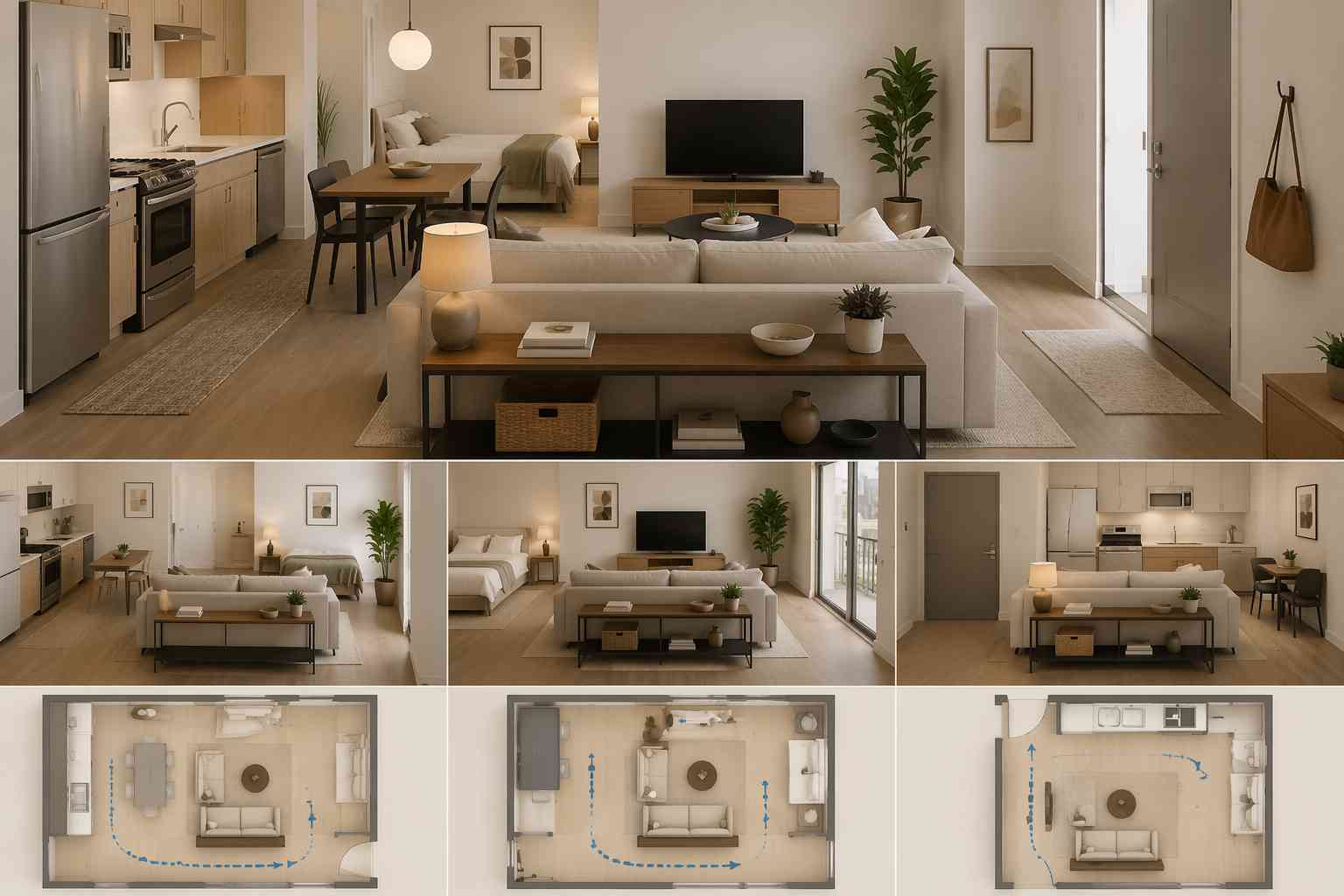 If your rental has an open-plan layout, the sofa can become a soft divider. Instead of pushing it against a wall, place it with the back facing the kitchen, dining area, bed area, or entry zone. This creates a visual boundary without building anything.
A floating sofa layout works well in studios, lofts, and apartments where the living room blends into another function. It helps the seating area feel like its own room.
To make the back of the sofa useful, add a narrow console table behind it. This can become a place for a lamp, books, keys, baskets, or a small work surface. If the front door opens into the living room, the console can also help create a small landing zone.
The important rule is to leave enough room behind the sofa. If the sofa blocks the main walking path, the layout will feel frustrating. Floating furniture should improve the flow, not interrupt it.
This is one of the best layouts to test with rental apartment AI because it can be hard to imagine from a floor plan alone. Generate a few versions with the sofa in different positions and compare how each one affects movement and zoning.
Layout Idea 3: The No Coffee Table Layout
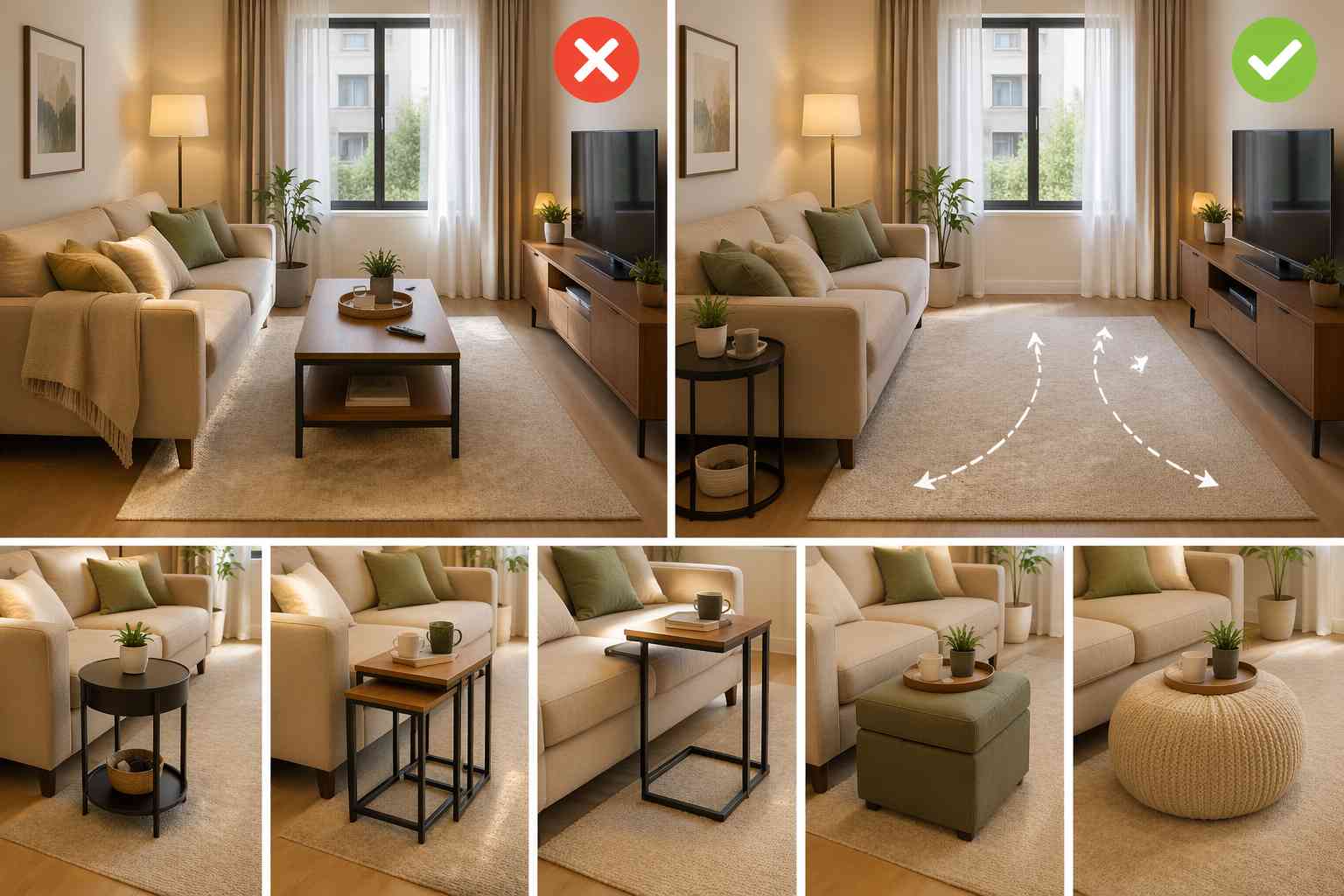 A traditional coffee table can be useful, but in a small rental it is often the piece that makes the room feel blocked. It sits in the middle of the walkway, collects clutter, and takes up valuable floor space.
Consider replacing it with something more flexible. A round side table, nesting tables, C-table, storage ottoman, or small pouf may work better. In very small rooms, removing the coffee table completely can make the room feel much larger.
This layout is especially useful if you exercise in the living room, have pets, host guests, or need to open a sofa bed. Keep the center open and use side surfaces instead.
A no coffee table layout may feel unusual at first, but it can make daily movement much easier. If you are unsure, test it for one week. Move the coffee table out of the room and notice whether the space feels more flexible.
Layout Idea 4: The Work-from-Home Layout
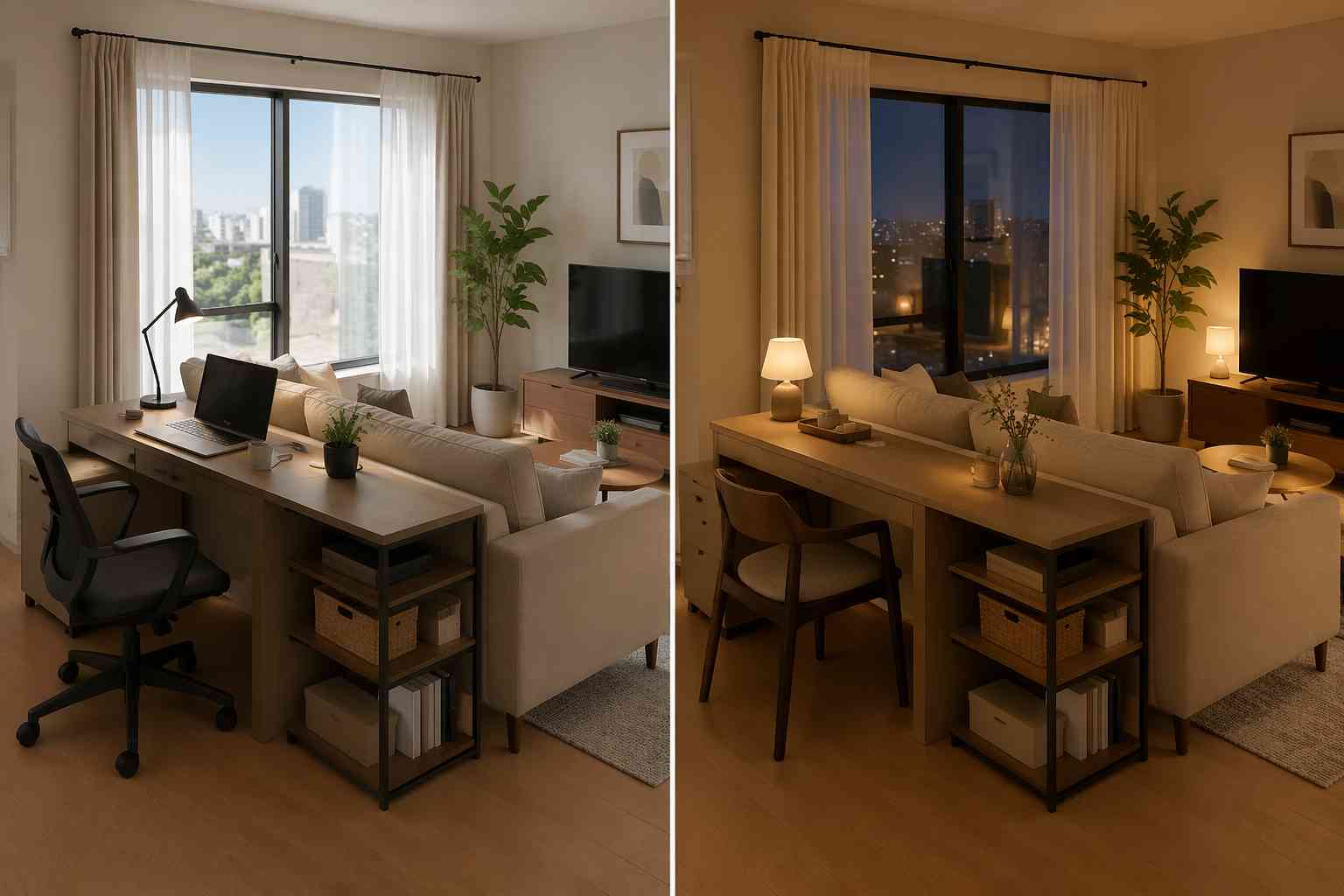 Many renters need to work from home but do not have a separate office. Adding a desk to a small living room can be difficult, but it is possible if you choose the right placement.
A narrow desk can go behind the sofa in an open-plan layout. A console table can become a laptop station during the day and a decorative surface at night. A foldable desk can disappear when not in use. A wall-leaning desk can provide storage and workspace with a small footprint.
Place the desk near natural light if possible, but do not block the window. Choose a chair that fits the room visually. If a bulky office chair makes the room feel crowded, consider a compact ergonomic chair or a dining-style chair with support.
Hide work items after hours. Use a drawer, box, basket, or cabinet so the living room can return to a relaxing mood at night.
When using rental apartment AI, ask for two versions of the layout: work mode and evening mode. This helps you see whether the room can support both productivity and rest.
Layout Idea 5: The Dining Combo Layout
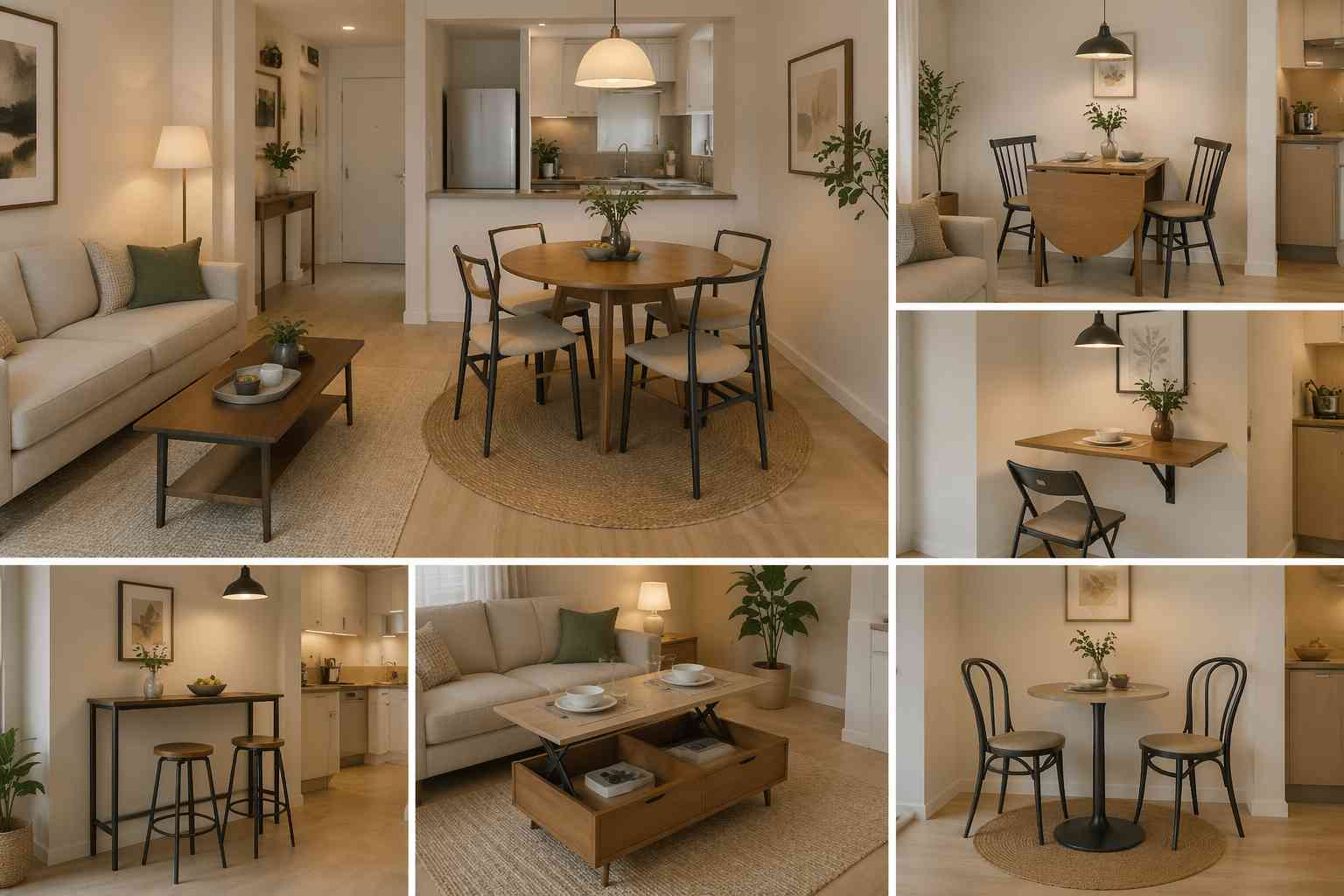 If your rental has no dining room, the living room may need to include a place to eat. The key is to make the dining area feel intentional rather than squeezed in.
A round table often works better than a rectangular table in a small room because it is easier to move around. A drop-leaf table is ideal for renters because it can expand for meals and shrink for daily life. A narrow bar table or wall-mounted folding table can work in very tight apartments.
Place the dining zone near the kitchen if possible. Use a small rug, pendant light, or wall art to define it. Keep chairs slim and easy to move.
If there is no space for a full dining table, use a lift-top coffee table, console table, or small bistro table. The best choice depends on how often you eat at home and how many people need seats.
Do not let the dining setup block the main walkway. A dining nook should support daily life, not make the room harder to use.
Layout Idea 6: The Storage Wall Layout
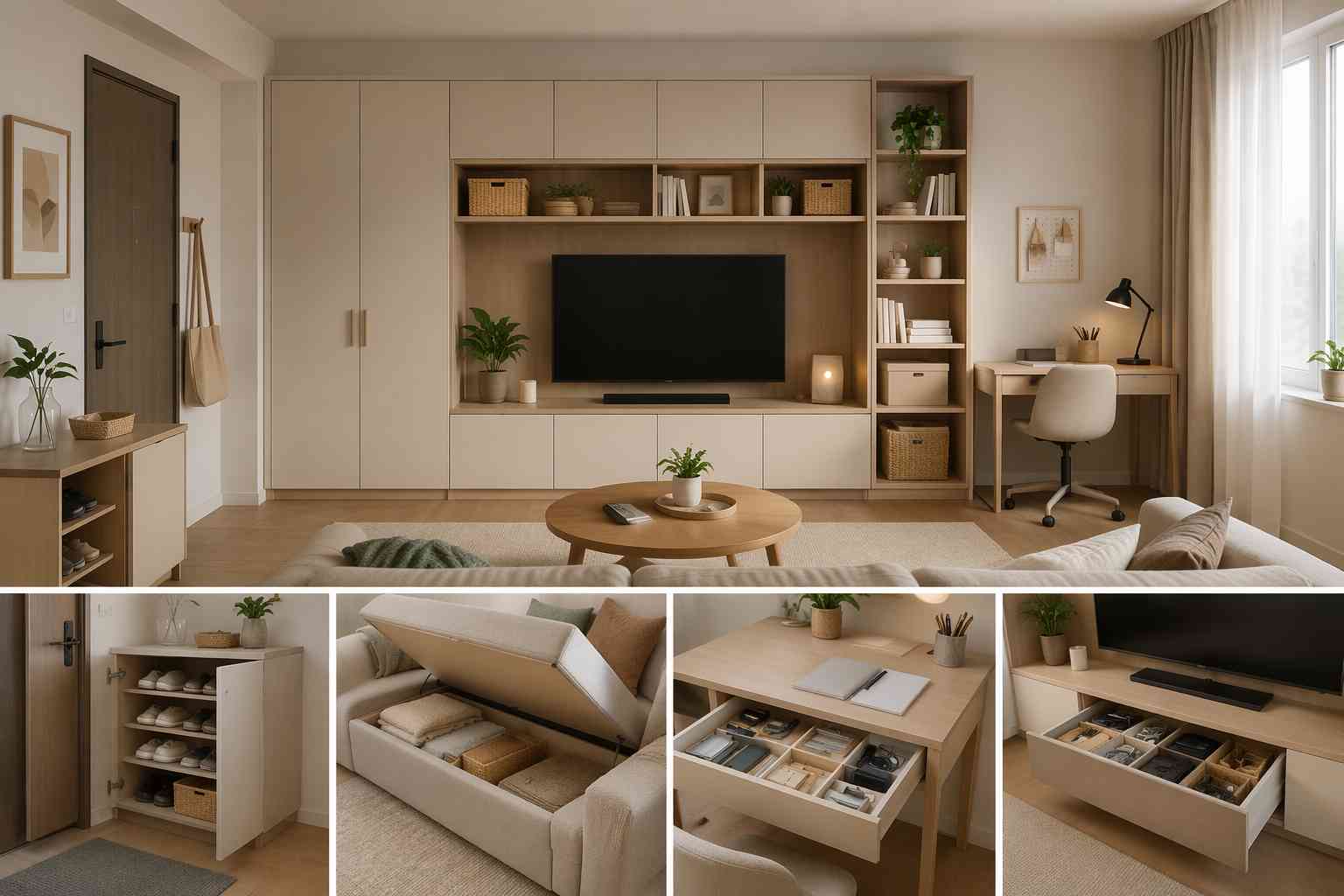 Storage is one of the biggest pain points in small rental apartments. Without enough storage, clutter spreads across tables, chairs, floors, and shelves. Once that happens, even a good layout starts to feel messy.
A storage wall can solve this problem by concentrating storage in one place. Use a mix of closed cabinets, baskets, and open shelves. Keep the storage unit slim and proportional to the room.
Closed storage is especially useful in small rooms because it reduces visual clutter. Open shelving can look beautiful, but it requires constant editing. If you use open shelves, combine them with baskets or boxes.
Try to keep storage close to where items are used. Store blankets near the sofa, shoes near the entry, work supplies near the desk, and cables near the TV. If storage is inconvenient, you will not use it.
A smart small living room layout does not just make furniture look good. It makes cleaning and daily routines easier.
Choose Furniture That Fits Small Rentals
The sofa controls the room more than any other piece of furniture. If it is too large, the layout becomes difficult. If it is too small, the room may feel unfinished. The best sofa for a rental living room is comfortable, proportional, and flexible enough to work in future apartments.
Look for apartment-size sofas, loveseats, slim three-seat sofas, or modular sofas with a compact depth. Sofas with narrow arms save space. Sofas with visible legs show more floor, which makes the room feel lighter. Low-back sofas can help maintain sightlines, especially in open-plan apartments.
A sectional can work in a small living room, but only when it fits the room shape. A compact L-shaped sectional can maximize seating in a corner, but a deep chaise may block movement. If you want lounge comfort, a movable ottoman may be better than a fixed chaise.
Use this table as a quick guide when choosing furniture for a small rental living room.
| Furniture Piece | Better Choice for Small Rentals | Avoid If Possible |
|---|---|---|
| Sofa | Apartment sofa, loveseat, slim three-seater | Oversized deep sofa |
| Sectional | Compact L-shape or modular sofa | Large chaise that blocks movement |
| Coffee table | Round table, nesting table, ottoman, C-table | Heavy rectangular table |
| TV unit | Slim low console with storage | Large entertainment center |
| Desk | Foldable desk, console desk, wall-leaning desk | Deep office desk |
| Storage | Tall narrow shelf, closed cabinet, storage bench | Many small scattered units |
| Chair | Compact accent chair or armless chair | Wide lounge chair in a narrow room |
| Rug | Large enough to connect the seating area | Tiny rug floating in the center |
If you already own a large sofa and cannot replace it, simplify everything around it. Use a smaller table, avoid bulky chairs, choose a slim media unit, and keep the walls visually calm. One large piece can work if the rest of the room gives it space.
Pick the Right Rug Size
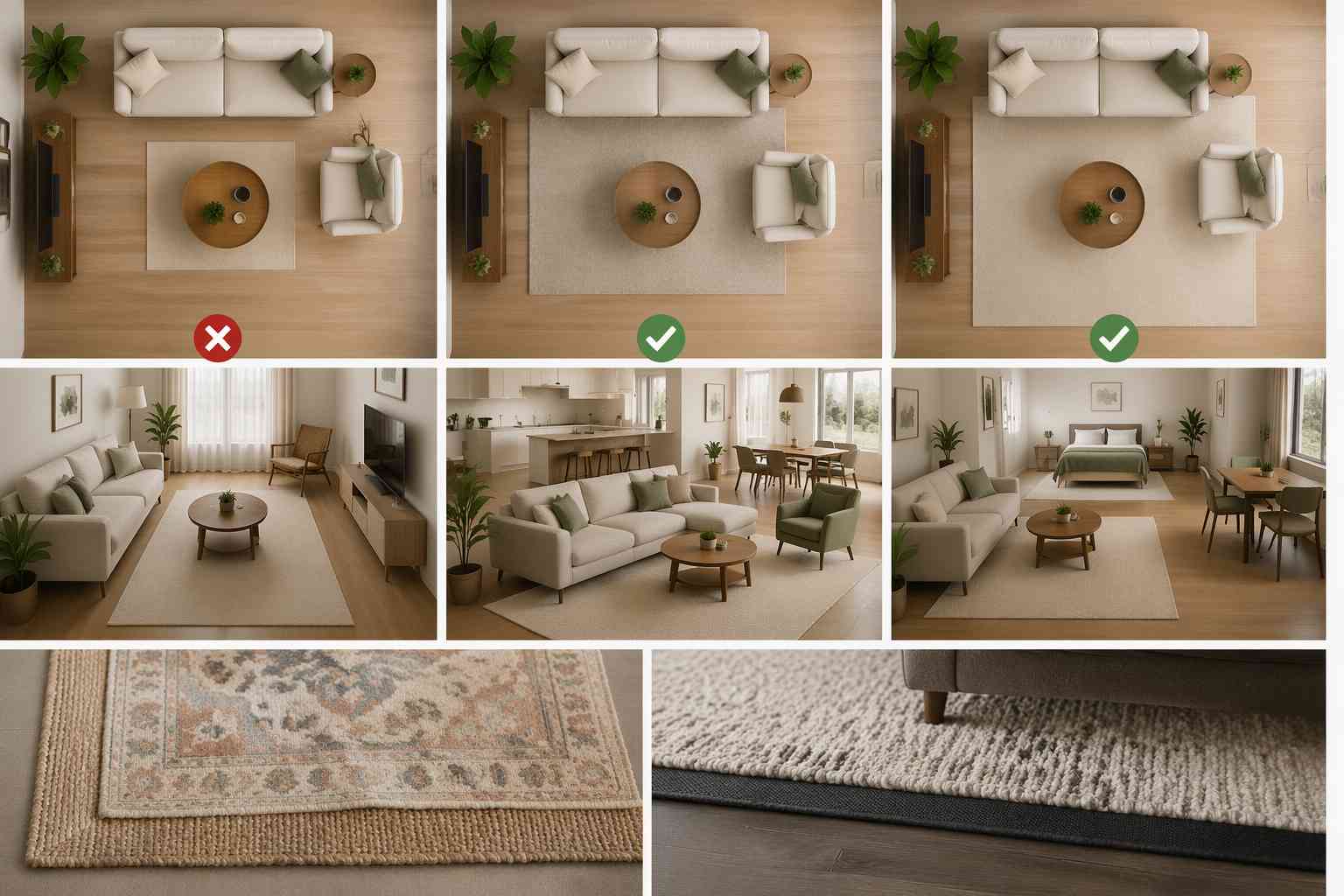 Rugs are powerful in small living rooms because they define zones, hide rental flooring, add warmth, and make furniture feel connected. But the wrong rug size can make the room feel smaller.
A rug that is too small can look like it is floating in the middle of the floor. It separates the sofa, chair, and table instead of bringing them together. A better option is usually a larger rug that reaches at least under the front legs of the main seating pieces.
If your room is narrow, use the rug to widen the seating area visually. If your room is open plan, use the rug to mark where the living area begins and ends. In a studio, this can help separate the sofa area from the bed or dining area without adding a divider.
If you love a small decorative rug, layer it over a larger neutral rug. This gives you the style you want while keeping the layout grounded.
For renters, rugs also solve practical problems. They soften sound, cover unattractive floors, protect surfaces, and make the apartment feel more personal without permanent changes.
Use Lighting to Make the Room Feel Designed
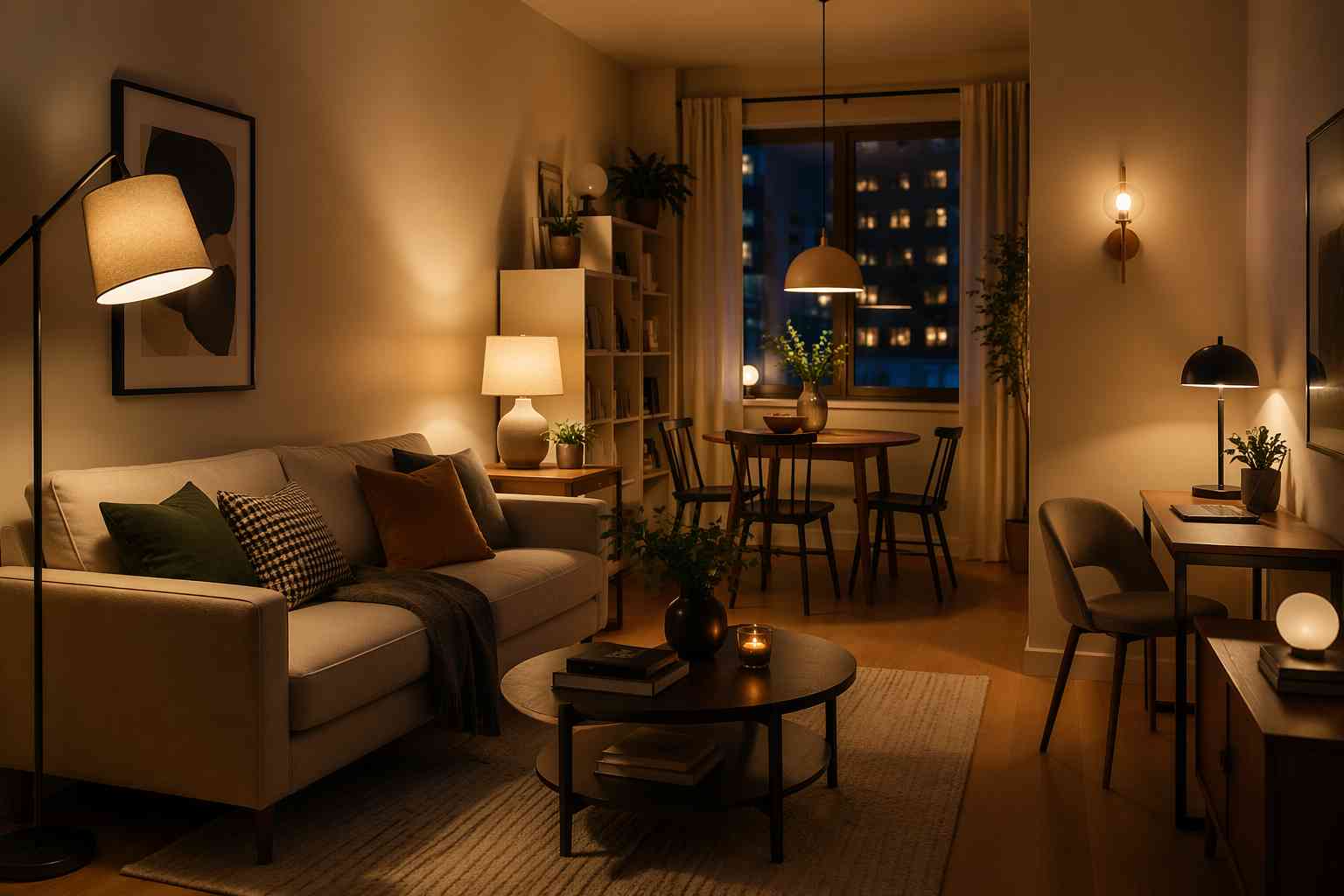 Rental lighting is often one of the weakest parts of an apartment. Many rentals rely on one overhead fixture that is too bright, too cold, or badly placed. In a small living room, poor lighting can make the room feel flat and cramped.
Layered lighting is an easy renter-friendly upgrade. Start with a floor lamp near the sofa. Add a table lamp on a side table, shelf, or console. Use a plug-in wall sconce if you want the look of built-in lighting without hardwiring. A small lamp in a dark corner can make the whole room feel deeper.
Warm light usually works better than harsh cool light in a living room. It makes the space feel softer and more comfortable. Use task lighting for reading or working, and ambient lighting for relaxing at night.
Lighting also supports layout. A lamp beside the sofa defines a reading area. A pendant over a small dining table creates a separate eating zone. A desk lamp turns a console into a work area. In a small rental, light can create rooms within a room.
Treat the Windows
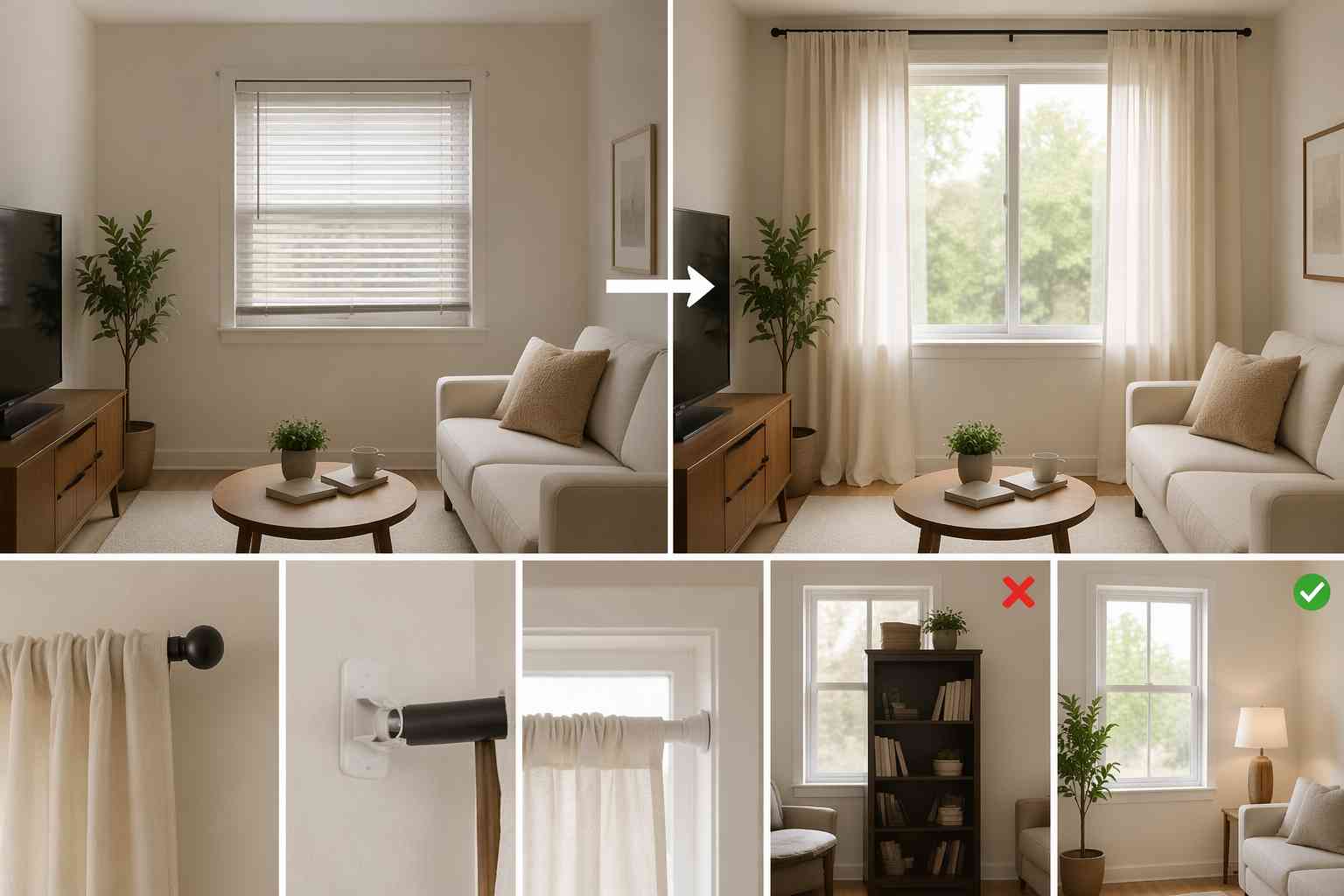 Windows have a big effect on how a small living room feels. Unfortunately, rental windows often come with cheap blinds, awkward shades, or no treatment at all. Improving the windows can make the room feel taller, softer, and more finished.
If possible, hang curtains high and wide. This makes the window appear larger and draws the eye upward. Choose curtains that reach close to the floor rather than stopping short. Light-filtering curtains are a good choice if you want privacy without losing natural light.
If drilling is not allowed, look for tension rods, no-drill curtain brackets, or renter-friendly mounting options that fit your window type. Always check the weight limits before hanging anything.
Curtains can also hide ugly blinds or soften a view you do not love. In a small rental, this kind of visual improvement can make a major difference without changing the property.
Do not block natural light with tall furniture. Keep bookcases, wardrobes, and large plants away from the main window if they darken the room. Natural light is one of the best tools for making a small living room feel bigger.
Hide the Ugly Rental Features
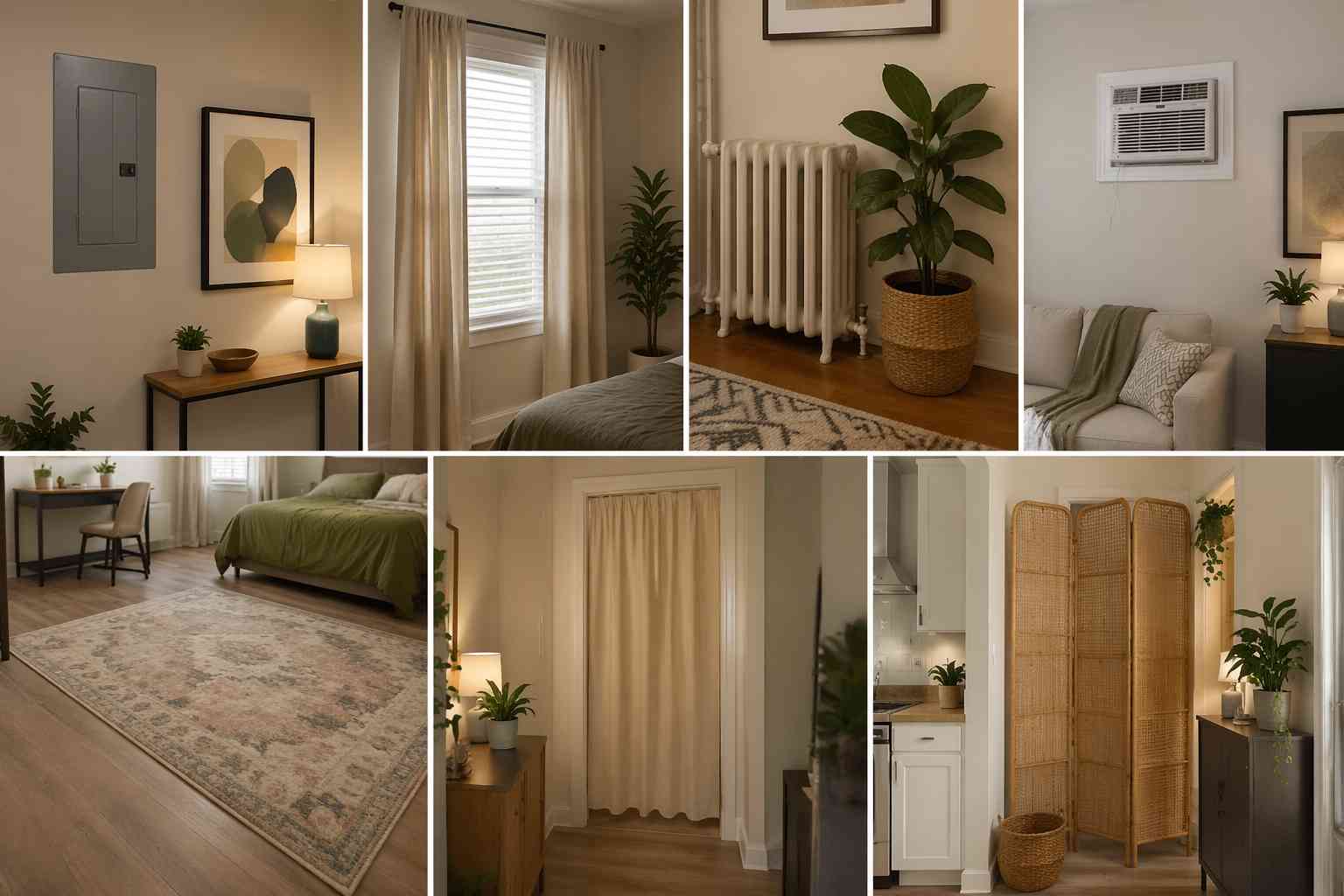 Most rentals have at least one feature you would not choose yourself. It might be a radiator, old thermostat, fuse box, strange wall texture, basic flooring, dated blinds, or an air conditioner in an awkward place. Since you may not be able to remove these features, the layout should help disguise or soften them.
Use art to cover a fuse box if it still allows access. Use curtains to soften unattractive windows or hide awkward doorways. Place a plant near a bulky radiator, but never block heat or create a safety issue. Use a rug to cover flooring you dislike. Use a console, basket, or folding screen to reduce attention on less attractive areas.
The trick is to hide without making the room feel crowded. Do not add a large piece of furniture just to cover something small. Choose lightweight, removable, and practical solutions.
AI can help here too. Upload a photo and ask for renter-friendly ways to disguise an eyesore without painting, drilling, or replacing fixtures. The best solutions often come from styling and placement, not renovation.
Add Personality Without Adding Clutter
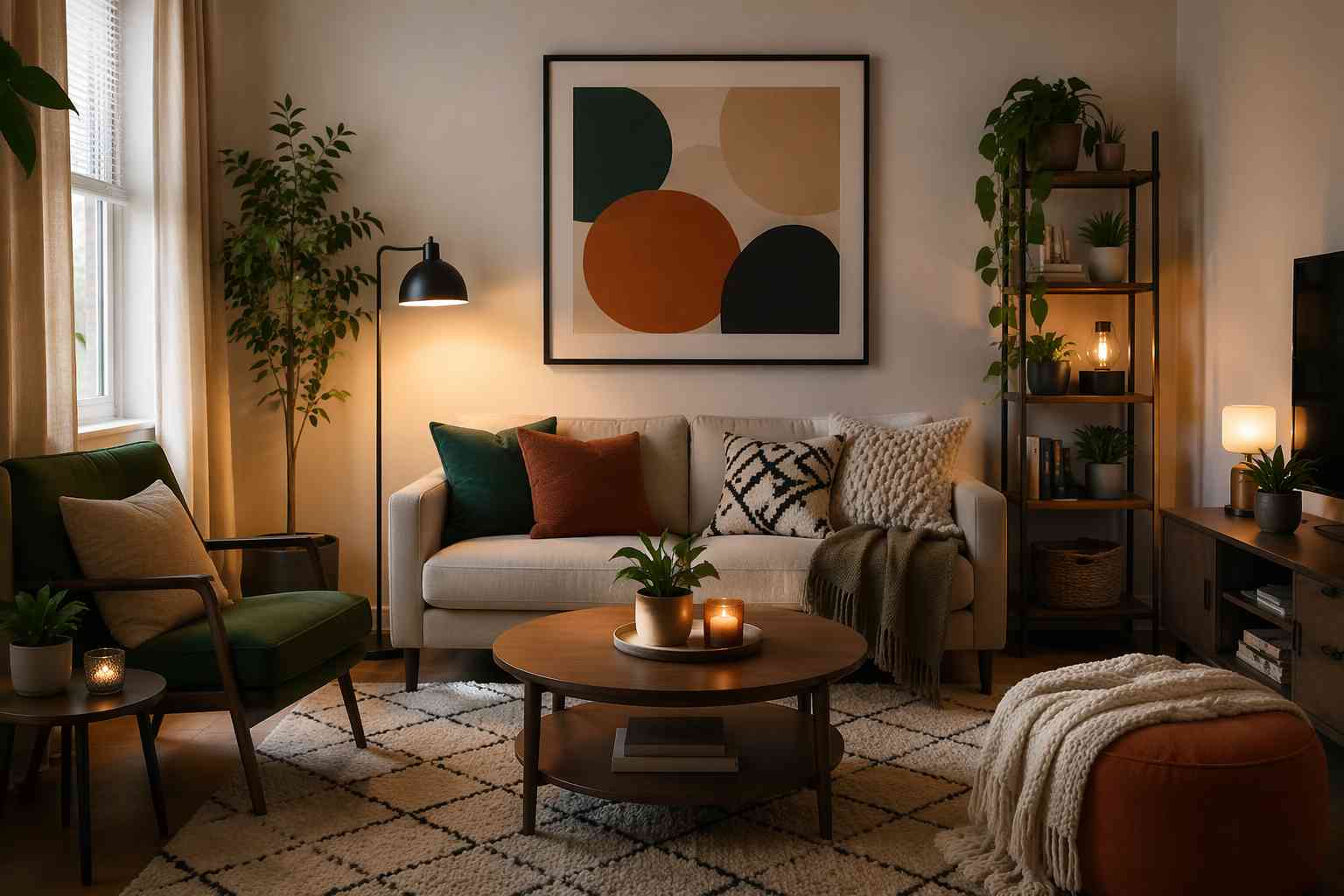 A small living room should not feel empty or generic. Personality matters, especially in a rental where you may not be able to change the walls, floors, or fixtures. But personality should be curated, not scattered.
Large art can be more effective than many small pieces. One oversized framed print above the sofa can create a strong focal point without using floor space. If you prefer a gallery wall, keep the frames cohesive so the room does not feel chaotic.
Textiles are another renter-friendly way to add character. Pillows, throws, curtains, and rugs can introduce color, pattern, and texture without permanent changes.
Plants also help. A tall plant can soften an empty corner. A small plant on a shelf can make the room feel more alive. If the room has little light, use low-light plants or high-quality faux greenery.
The rule is simple: every decorative item should either add beauty, function, warmth, or meaning. If it does none of those, it may be making the room feel smaller.
AI Prompt Ideas for Small Living Room Layouts
If you want to use rental apartment AI more effectively, give it clear instructions. Mention the room type, rental limits, must-have furniture, pain points, and style preference.
| Goal | AI Prompt Example |
|---|---|
| Basic rental layout | “Create a small living room layout for a rental apartment with a compact sofa, slim TV console, clear walking path, and no permanent changes.” |
| Studio zoning | “Design a studio apartment layout using a floating sofa to separate the living area from the sleeping area, with renter-friendly storage.” |
| No coffee table layout | “Show a small rental living room without a coffee table, using side tables, open floor space, a soft rug, and practical lighting.” |
| Work-from-home setup | “Create a rental apartment AI layout with a compact desk, sofa, storage, natural light, and an evening relaxation setup.” |
| Storage solution | “Design a small living room layout with a renter-friendly storage wall, closed cabinets, baskets, open shelves, and clear flow.” |
| Brighter room | “Make this small rental living room feel brighter using light curtains, mirrors, floor lamps, low furniture, and minimal clutter.” |
| Dining combo | “Create a small living room and dining combo layout with a compact round table, sofa, rug zoning, and renter-friendly decor.” |
The more specific the prompt is, the more useful the result will be. Instead of asking for a beautiful living room, ask for a layout that solves your real rental problem.
Common Mistakes to Avoid
Do not buy furniture before planning the layout. In a small rental, every inch matters. Measure first, visualize second, buy last. Do not overcrowd the room. A small living room does not need every standard furniture piece. You may not need a coffee table, two side tables, an accent chair, and a large TV stand. Do not block natural light. Windows make small rooms feel larger, so keep them open and visible. Do not ignore the entry area. If the door opens into the living room, create a landing spot for shoes, bags, and keys. Do not rely only on overhead lighting. Add lamps to create warmth, depth, and zones. Do not choose furniture only because it is small. Too many tiny pieces can look messy. Sometimes one well-scaled sofa and one good storage piece work better than several small items. Do not forget that you are renting. Choose flexible, removable, and moveable solutions whenever possible.
| Mistake | Better Alternative |
|---|---|
| Buying a large sofa first | Plan the full layout before choosing sofa size |
| Using a tiny rug | Choose a rug that connects the seating area |
| Keeping a bulky coffee table | Try nesting tables, C-tables, or an ottoman |
| Blocking the window | Keep natural light open and visible |
| Using only overhead lighting | Add floor lamps and table lamps |
| Scattering storage everywhere | Create one clear storage zone |
| Copying a large home layout | Design around rental limits and daily habits |
A Simple Planning Process for Renters
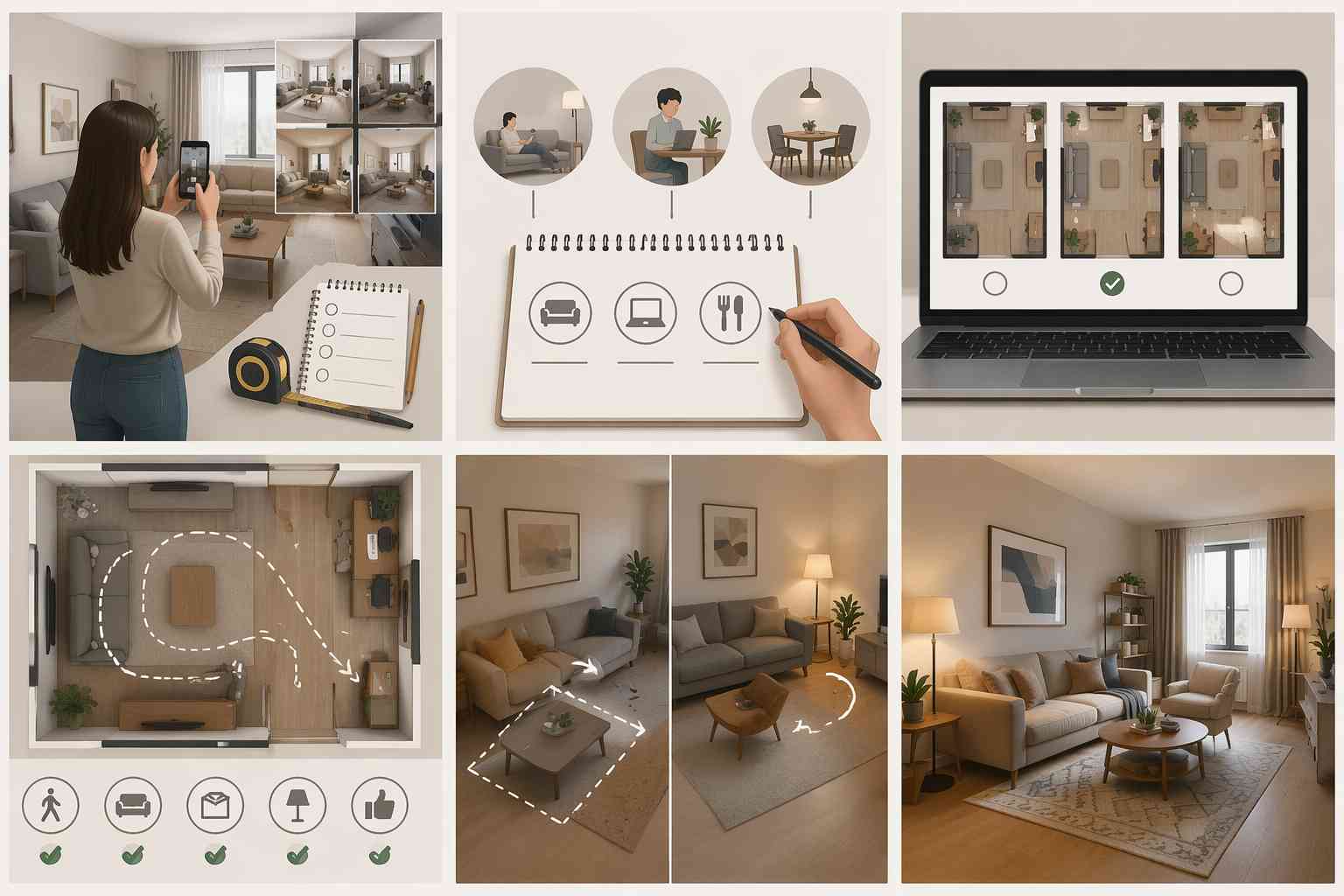 Start by taking photos of your living room from every corner. Then measure the room and furniture. Write down the problems you want to solve, such as poor traffic flow, not enough storage, no work area, bad lighting, ugly floors, or a blocked window.
Next, define the room’s top functions. Choose no more than three. For example: relaxing, working, and dining. Or TV watching, storage, and guest sleeping.
Then use EzRemove Free AI Interior Design Online to generate three layout options. Ask for renter-friendly ideas only. Compare the layouts based on walking paths, furniture scale, storage, lighting, and how realistic they are for your lease.
After that, test the easiest change first. Move a chair, remove the coffee table, rotate the rug, add a lamp, or create an entry zone. You do not need to redesign everything at once.
Finally, refine the room with textiles, storage, lighting, and personal details. A good layout is the foundation. Decor comes after the room works.
Final Thoughts
A small rental living room is not a design failure. It is a puzzle. The answer is not always more furniture, more decor, or more storage. Often, the answer is a better small living room layout.
When the sofa fits the room, the walkway is clear, the rug anchors the seating area, the lighting creates warmth, and the storage supports daily habits, even a tiny rental can feel comfortable and intentional. You may not be able to renovate, but you can still change the way the room feels and functions.
Rental apartment AI gives renters a helpful new way to plan. It lets you test ideas visually, compare furniture placement, explore renter-friendly upgrades, and avoid costly mistakes before moving or buying anything. Use it with real measurements, honest priorities, and practical judgment.
The best rental living room is not the one with the most impressive furniture. It is the one that makes everyday life easier. Start with the layout, solve the real pain points, and let the room become a space that works for you.
FAQs About Small Living Room Layouts for Rentals
What is the best small living room layout for a rental apartment?
The best layout depends on your room shape and daily routine. For many renters, a sofa along the longest wall, a properly sized rug, slim storage, and a clear walkway are the safest starting points. In open-plan rentals, a floating sofa can help divide the living area from the kitchen or dining zone.
How can rental apartment AI help with furniture placement?
Rental apartment AI can help you preview different furniture arrangements before you move anything. You can test sofa placement, desk locations, rug sizes, storage walls, and renter-friendly decor ideas. It is especially useful for small spaces where every furniture decision affects the whole room.
How do I make a small rental living room feel bigger?
Keep walkways open, use furniture with visible legs, choose a large enough rug, add layered lighting, use mirrors carefully, and avoid blocking windows. Removing one unnecessary furniture piece can also make the room feel much larger.
Should a sofa always go against the wall in a small living room?
No. A wall sofa layout works well in narrow rooms, but a floating sofa can be better in studios or open-plan apartments. The right choice depends on traffic flow, focal point, and how many functions the room needs to support.
What can I use instead of a coffee table?
Try a round side table, nesting tables, C-table, storage ottoman, or small pouf. In very tight rooms, removing the coffee table completely can improve flow and make the space more flexible.
How do I add storage to a small rental living room?
Use hidden storage furniture such as ottomans, benches, media consoles with drawers, and side tables with cabinets. Use vertical storage when floor space is limited, and combine open shelves with baskets or boxes to reduce visual clutter.
How can I decorate a rental living room without losing my deposit?
Use rugs, curtains, plug-in lamps, removable hooks, freestanding shelves, leaning mirrors, baskets, plants, and art that can be hung with renter-friendly methods. Always check your lease before drilling, painting, or replacing fixtures.
How do I fit a desk into a small living room?
Use a compact desk, wall-leaning desk, foldable table, or console table. Place it near natural light if possible, but do not block the window. Store work items after hours so the living room still feels relaxing.
What is the biggest mistake in small living room layouts?
The biggest mistake is overcrowding. Many renters try to fit a full-size sofa, large coffee table, TV stand, desk, dining table, and storage into one small room. A better layout starts with priorities and removes pieces that do not support daily life.
Can a small rental living room still feel stylish?
Yes. Style comes from proportion, lighting, texture, color, and intention. A small rental can feel stylish with a good rug, warm lamps, clean storage, thoughtful art, curtains, plants, and furniture that fits the room properly.